Whale Sharks
Whale Sharks of Saleh Bay: A Complete Guide Before You Go
20 August 2026 · 9 min read
Why whale sharks show up almost every morning in this bay, what time you should really depart, and what you should know before getting in the water.
Why Saleh Bay, and Not Somewhere Else?
Saleh Bay is the largest bay on Sumbawa Island, covering roughly 1,459 square kilometres and connecting directly to the Flores Sea. But size isn't why whale sharks gather here. The real reason is much simpler, and far more interesting: fishermen's bagan platforms.
A bagan is a floating platform used by local fishermen. Every night, bright lights on the platform are switched on to draw in plankton, and the plankton in turn attracts small fish. When the nets are hauled up in the morning, some of the plankton and small fish escape into the surrounding water — and that's exactly where the whale sharks come to feed.
This pattern repeats almost daily, all year round. That's what sets Saleh Bay apart from most other whale shark destinations in the world, which are usually only accessible during a specific migration season. Here, the schedule is set by the fishermen's routine, not by the season.
Since 2018, Conservation International Indonesia has worked with the local community to develop the area as a community-based ecotourism site, complete with strict interaction rules to protect the whale shark population.
Why the Early Start? Here's the Reason
The departure time for a whale shark trip tends to catch people off guard: 2 a.m. if you're leaving from Sumbawa Besar, or 3:30 a.m. if you're staying overnight in Labuan Jambu. It sounds unreasonable — until you know why.
Whale sharks appear most often around 6 a.m., right when the fishermen start hauling in their nets. The trip from the village out to the bagan area itself takes about two hours by boat. If you're starting from Sumbawa Besar, add roughly three more hours of overland travel on top of that.
Count backwards from 6 a.m. and you'll land on exactly those departure times. It's not about making guests suffer — it's about being in the right place at the right time.
What It's Actually Like Out There
The journey out to the platforms
The boat sets off while the sky is still dark. The sea is usually calm at this hour. You'll see the lights of scattered bagan platforms in the distance, like a small floating town, and the sky slowly opens up as the boat gets closer.
One thing people rarely mention: the traditional fishing boat's engine is fairly loud for a two-hour ride. Bring earplugs or cotton wool if you're sensitive to noise.
Finding the right platform
Not every platform gets a visit from a whale shark on the same day. The crew will cruise around looking for whichever bagan has drawn a big visitor that morning. The search itself is part of the experience — and when a huge shadow finally appears beneath the surface, the moment feels nothing like looking at a photo.
Getting into the water
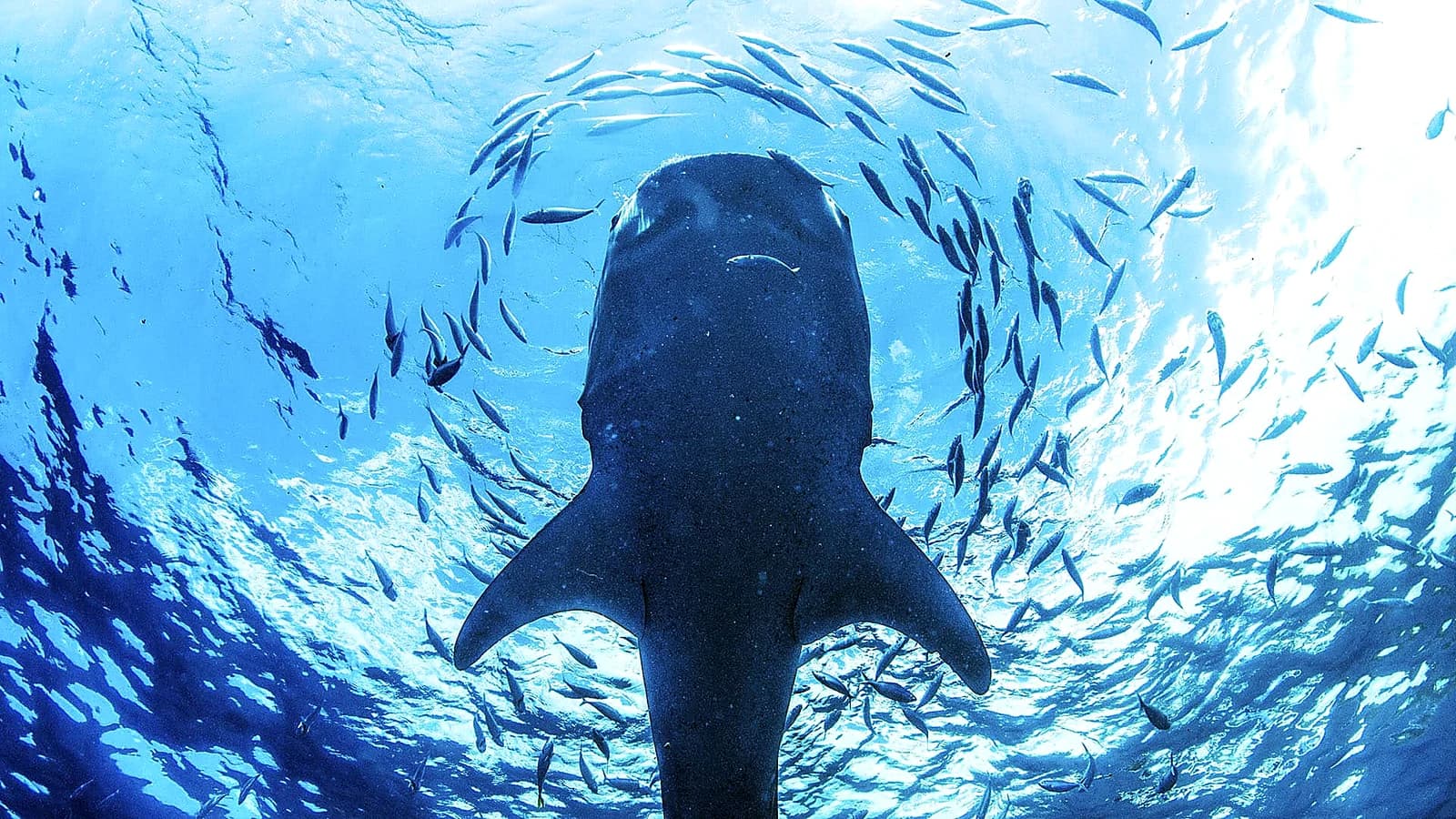
After a briefing, you ease into the water calmly — feet first, never jumping in. Loud noises and big splashes can scare the whale sharks away. From three metres away, their sheer size finally sinks in: a fish the length of a city bus, moving slowly and utterly unbothered by your presence.
Around 8 a.m., a light breakfast is served on the boat, and the journey back begins.
Interaction Rules You Must Follow
Whale sharks are listed as Endangered on the IUCN Red List. The rules below aren't just a formality — they're part of the area's operating permit, and they protect the animal as much as they protect you.
- Keep a minimum distance of 3 metres. A flick of their tail carries real force and can injure you if you're too close.
- Don't touch. A whale shark's skin is coated in a mucus layer that's important for its health. Its skin is also rough and can scrape yours.
- Turn off your camera flash. A sudden flash of light can startle them and change their behaviour.
- Enter the water calmly, feet first. Never jump in from the boat.
- Follow your guide's instructions. Always, with no exceptions.
The Best Time to Go, and When to Avoid It
Whale sharks can technically be spotted year-round in Saleh Bay, but that doesn't mean every month is equally good.
April through November is the ideal window. The sea is calmer, the water clearer, and the bagan fishermen operate consistently. If your schedule is flexible, aim for this stretch.
January through March is best avoided. Weather is often unpredictable, waves can get fairly big, and many bagan fishermen stop going out — which naturally lowers your chances of an encounter. Trips can still run during this period, but confirmation is usually only given close to the departure date, depending on sea conditions.
What to Bring
- A light jacket — the early-morning ride out to sea gets cold
- High-SPF, water-resistant sunscreen
- Sunglasses
- Earplugs or cotton wool for the boat ride
- Swimwear and a change of clothes
- An action cam or waterproof camera, if you have one
Setting Realistic Expectations
We'd rather guests arrive with an honest picture of what to expect than feel let down on the day.
The fishing boats used in Saleh Bay are open, with no enclosed cabin. Bring sun protection and something warm for the morning. Accommodation in Labuan Jambu is homestay-level, not a star-rated hotel. Mobile signal can also be weak around the bay, so let your family know before you head out.
And most importantly: whale sharks are wild animals. The odds of an encounter in Saleh Bay are high thanks to the consistent bagan pattern, but nobody can guarantee it a hundred percent. Be wary of anyone who promises an absolute certainty.
Getting to Know the Whale Shark (Rhincodon typus)
Despite the word "shark" in its name, this animal doesn't prey on humans. Whale sharks are filter feeders — they take in seawater and filter out tiny organisms through their wide mouths. We're simply not on the menu, and there are no recorded whale shark attacks on humans.
They can grow to around 12 metres long and weigh up to 20 tonnes, making them the largest fish alive in the ocean today.
The pattern of white spots on their body is unique to each individual, much like a human fingerprint. Scientists use this pattern to identify and track specific whale sharks across different parts of the world.
Frequently Asked Questions
Is it safe to swim with whale sharks?
Yes. Whale sharks are filter feeders, not predators, and there are no recorded cases of attacks on humans. What matters is keeping the minimum safe distance of 3 metres and not touching them.
What time does the trip usually start?
It depends on your starting point. From Labuan Jambu, around 3:30–4:00 a.m. From Sumbawa Besar, hotel pickup is around 2:00 a.m. because of the roughly 3-hour drive beforehand.
Can children join?
Yes, as long as the child can already swim and is accompanied by a parent. For younger children, a Moyo Island trip is usually a better fit since it doesn't require an early-morning start.
What happens if the whale shark doesn't show up?
It's a small but real possibility, since whale sharks are wild animals. As this is beyond our control, if this happens we will refund IDR 1,000,000 from your total payment.
Which month is best to visit?
April through November. The sea is calmer, the water clearer, and the bagan fishermen operate consistently. January through March is best avoided if your schedule allows.
Ready to plan your trip?
Free consultation, no obligation. Tell us your plans and we'll help shape a realistic trip.